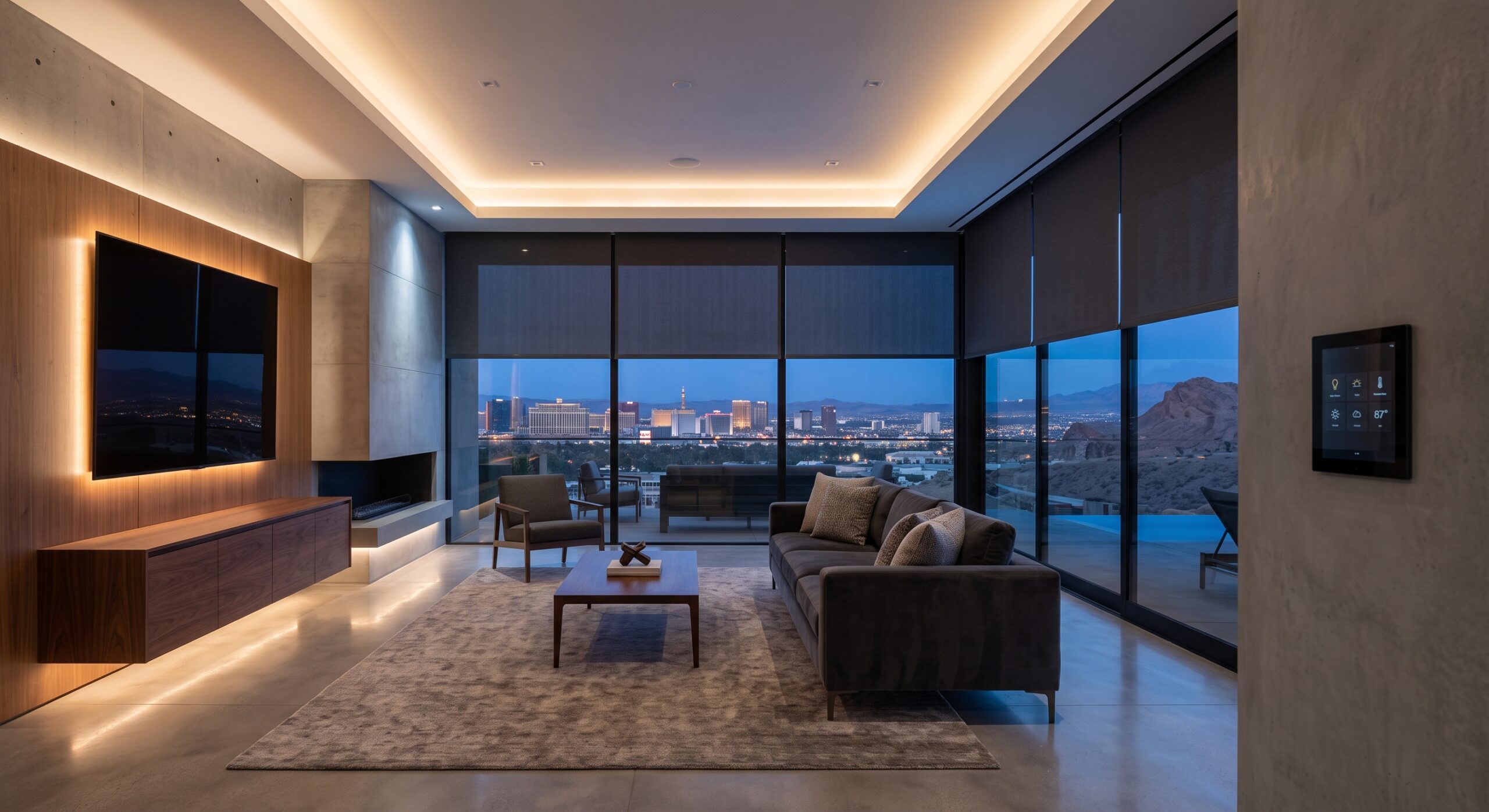
For years, smart home tech in luxury listings meant a flashy demo — voice-activated lighting, a tablet mounted on the wall, something to show off during an open house. That era is ending. The shift happening right now in luxury smart home design is away from novelty and toward invisible, reliable systems that just work — and buyers are getting sharper about telling the difference.
The Foundation: One System, Not Ten Apps
The single biggest signal of a well-executed smart home in 2026 isn’t any individual gadget — it’s whether the house runs on one unified automation platform that controls lighting, climate, audio, security, shading, and access from a single interface, instead of a homeowner juggling six different apps for six different vendors. Buyers touring high-end homes are starting to ask about this directly, and it’s become a real differentiator between a house with smart features and a genuinely smart house.
What’s Actually In Demand Right Now
Smart lighting remains the single most requested feature — adjustable, programmable, and increasingly tied into circadian-rhythm lighting that shifts color temperature through the day. Smart locks and access control have moved from a security add-on to a design consideration, with newer lock hardware built to disappear into the door rather than announce itself. Motorized shades tied to sunlight sensors, and humidity sensors that trigger bathroom fans automatically, are the kind of “boring but expensive to retrofit” features that buyers are now willing to pay for upfront rather than add later.
Energy Systems Are Becoming a Selling Point
Programmable HVAC zoning, real-time energy dashboards, and advanced access controls are showing up in listing copy because they’re closing deals — sellers who highlight them are seeing stronger offers across both luxury and mid-market segments. In a market where utility costs in a 6,000-square-foot desert home are a real line item, that’s not a gimmick; it’s a monthly savings buyers can do math on.
What’s Next
AI-driven maintenance alerts — systems that flag a failing water heater or an HVAC unit trending toward failure before it actually breaks — along with electrochromic smart glass that tints on demand instead of relying on shades, are starting to show up in new luxury construction. These are early, but they’re the features that will separate “smart home from five years ago” listings from current ones fastest.
The Buyer Takeaway
When you’re touring a home marketed as a “smart home,” ask what happens if the wifi goes down, whether the systems are on one platform or several, and who services it locally. A beautiful demo during a showing means nothing if the system requires a specialist flown in from out of state to troubleshoot. I walk every smart-home listing through exactly that filter before I put a client’s name on an offer.